Biomass such as straw, animal manure, and organic waste plays a central role in the global transition to a more sustainable, climate-friendly economy. As the world shifts from fossil-based to bio-based economies, biomass is a key enabler—offering a renewable, climate-compatible alternative to fossil raw materials and fuels while supporting sustainable value chains, especially in rural areas.
To discuss the potential of biomass for bioenergy production and the broader shift to a bio-based economy, the Sino-German Agricultural Centre (DCZ), together with the Foreign Economic Cooperation Center (FECC) of the Chinese Ministry of Agriculture and Rural Affairs (MARA) and industry partner Wanhao Energy, hosted a two-day event on 24–25 April 2025 in Hefei and Bengbu, Anhui Province. The event brought together scientists, industry experts, and policymakers from China and Germany.
Discussions on technologies and potentials
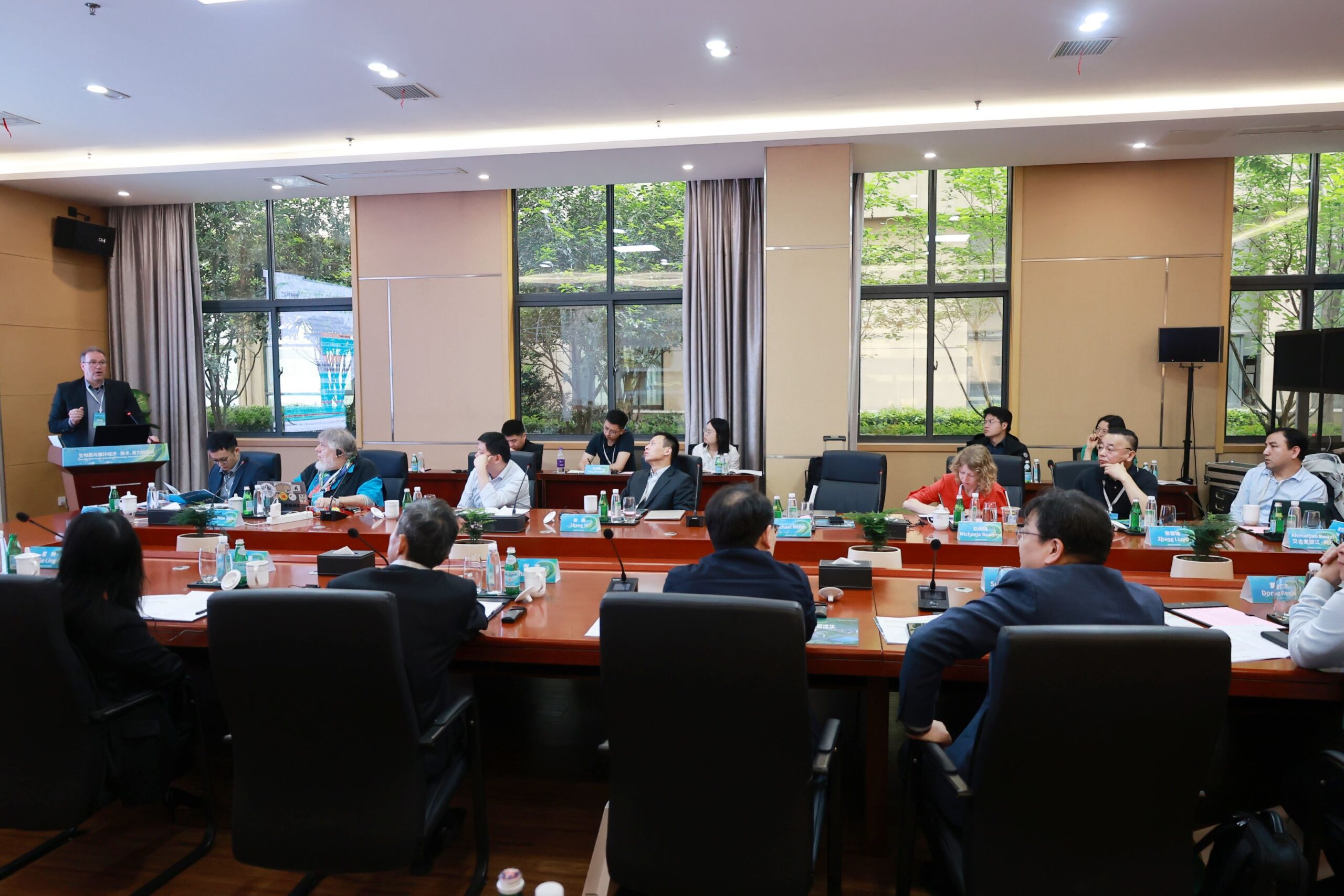
On the first day, participants gathered at Wanhao Energy’s headquarters in Hefei for a series of keynote speeches and a roundtable discussion. After welcoming remarks from Zhang Wen from Anhui Department of Agriculture and Rural Affairs, Wanhao’s Board Director Yang Meirong, and DCZ Deputy Director Michaela Boehme, Zhang Yi from the Lower Saxony Representative Office discussed potentials for cooperation in the bio-energy sector between Lower Saxony and its partner province Anhui.
Michael Nelles, Scientific Managing Director of the German Biomass Research Centre (DBFZ) and Professor and Chair of Waste and Material Flow Management at the University of Rostock, opened the technical session by highlighting the role of biogenic waste and residues as valuable sources for the production for renewable fuels and bio-based products, helping to achieve climate neutrality and develop a circular, bio-based economy. Sun Yongming, Deputy Director of the Guangzhou Institute of Energy Conversion, Chinese Academy of Sciences, introduced approaches to anaerobic bioconversion to decarbonize the energy system and presented new conversion pathways enabling the high-value utilization of biomass.
This was followed by a presentation by Yang Wen from Fraunhofer’s China Office, introducing the thermal-chemical conversion of biogenic residues using TCR technology, a process that transforms biogenic residues into products with a near-zero carbon footprint, including syngas, oils, and char for soil application, carbon storage, and energetic use. Zhang Liuyu, General Manager of Wanhao Energy, shared insights into the company’s liquefied biomethane (LBM) production and carbon capture technologies.
A roundtable moderated by Professor Wang Xiaoxi from Zhejiang University explored the role of biomass energy in rural development. While Heinz-Peter Mang from the University of Science and Technology Beijing (USTB) and Technical Director at UPM Umwelt-Projekt-Management GmbH discussed the environmental, economic, and social benefits of Germany’s Bioenergy Village Initiative, Meng Haibo, Director at the Chengdu Biogas Institute of the Ministry of Agriculture and Rural Affairs (BIOMA) presented the drivers and prospects for anaerobic waste processing for energy production and low-carbon development in China.
Professor Dong Renjie from China Agricultural University elaborated on the emission reduction potential from biogas plants, including carbon capture and sequestration capacity, and presented emission reduction pathways for livestock and rice paddy production. German and Chinese company representatives also participated in the roundtable, showcasing technologies for agricultural waste collection and management.
Technical presentations and roundtable discussion at Wanhao Energy headquarters, Hefei, Anhui Province
Insights from site visits
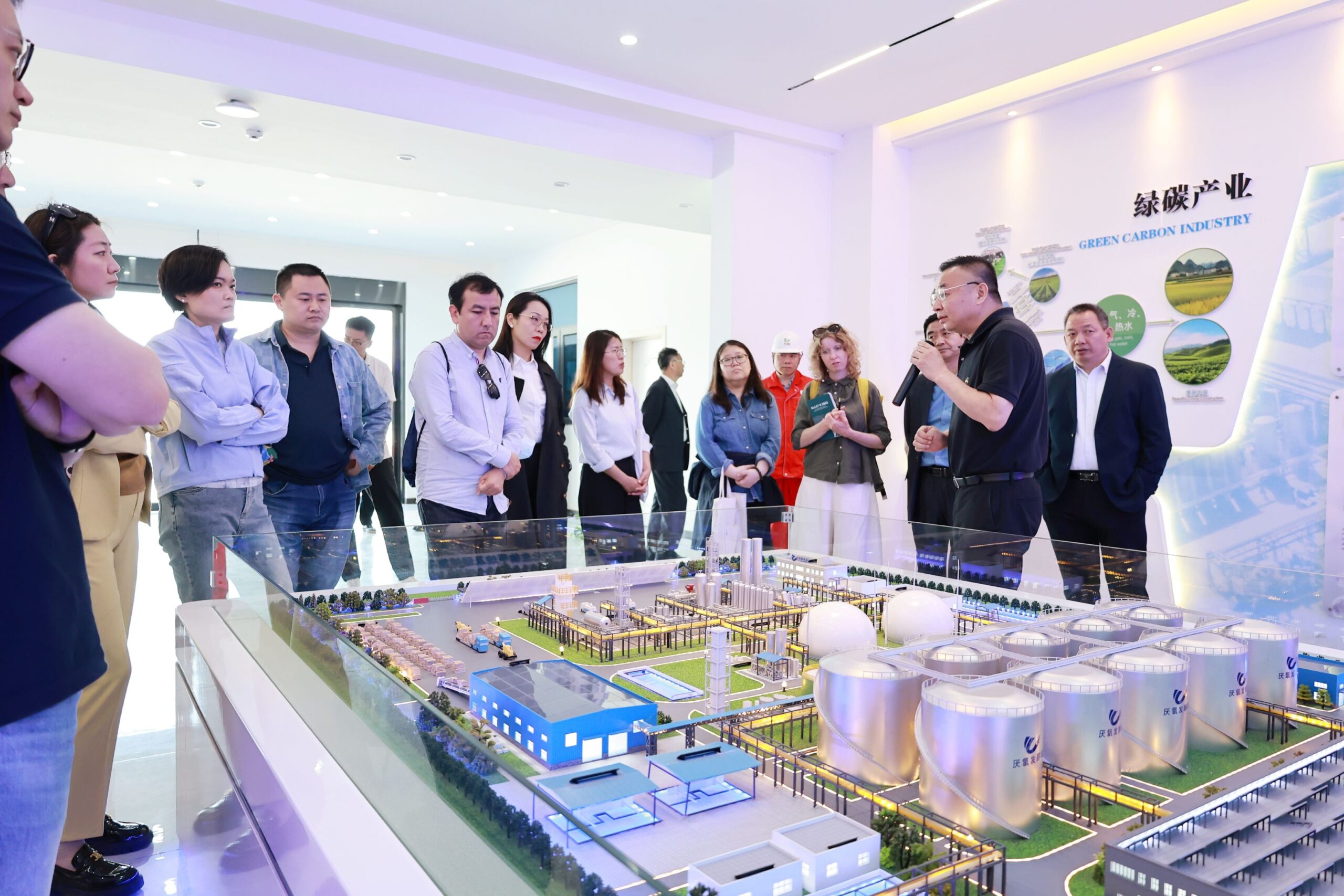
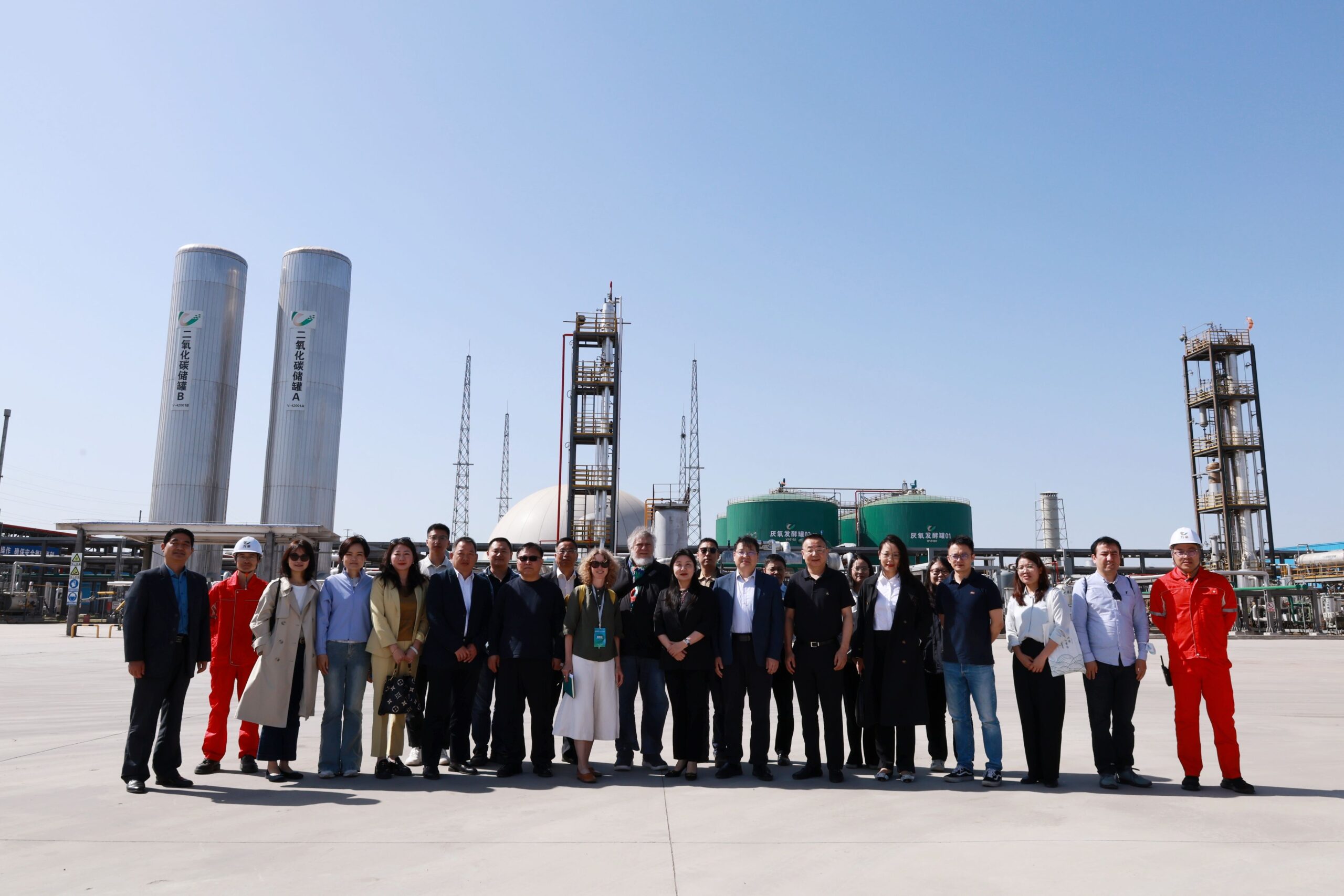
The second day featured site visits to Wanhao Energy’s liquefied biomethane and carbon capture facilities in Bengbu. Participants observed how crop straw, livestock manure, and kitchen waste are converted through a high-temperature and mixed anaerobic fermentation process into bio-LNG (liquefied natural gas) and liquid carbon dioxide, alongside the production of organic fertilizers.
Wanhao’s operations benefit from an extensive straw collection system established by local government authorities across Bengbu and its surrounding counties. Specialized straw management agencies and over 100 collection points help gather straw from smallholder farms, ensuring a continuous and stable feedstock supply. The system not only supports the conversion of agricultural by-products such as straw to value-added economic uses but also provides income opportunities for rural communities and farmers, who receive government support for setting up collection points and benefit from new job opportunities in the biomass economy.
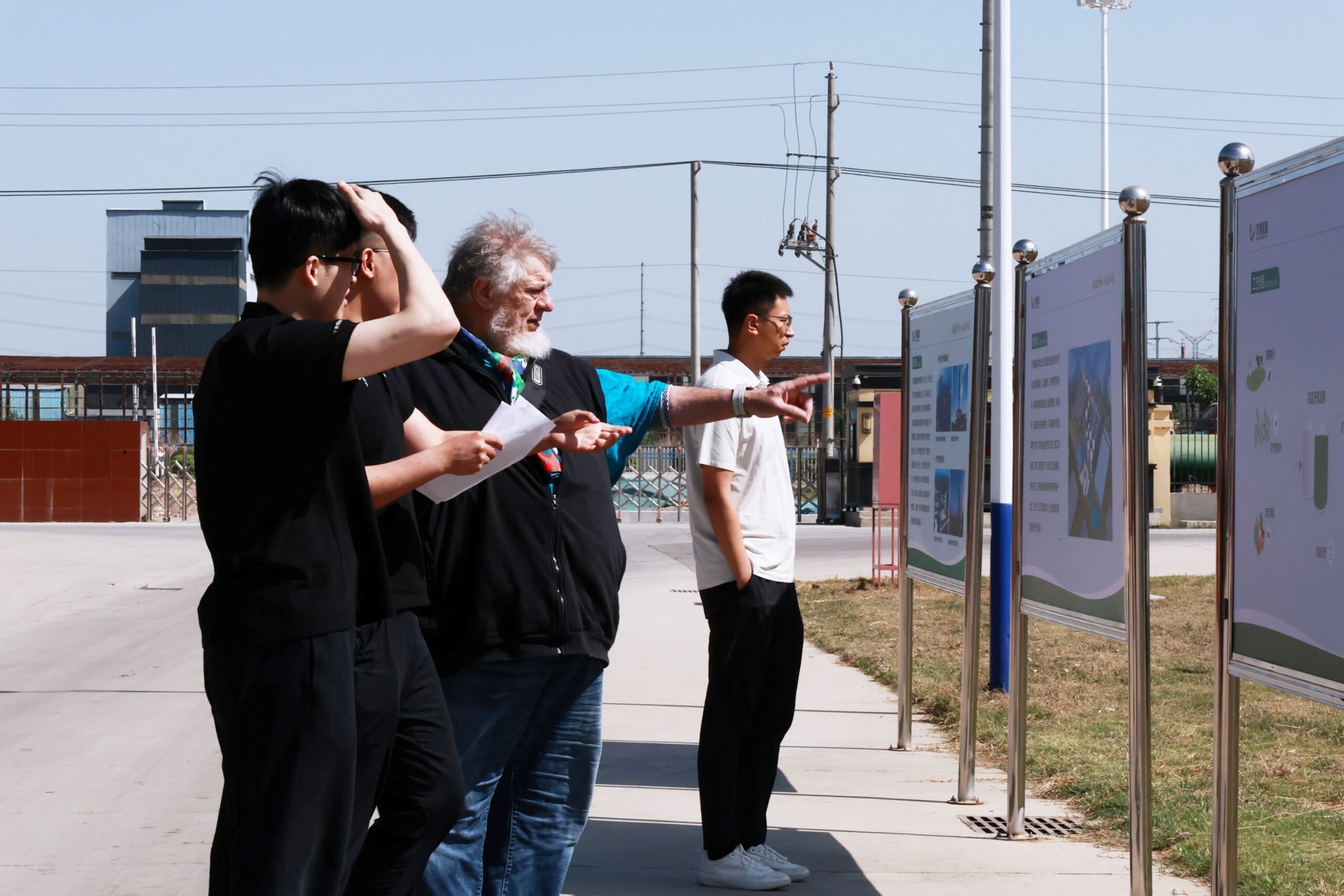
The day ended with a visit to Anhui Huinong Straw Group, a large-scale straw collection and storage station in Bengbu.
Visit of Wanhao Energy's bio-refinery in Bengbu, Anhui Province
Example of a circular bioeconomy in practice
The event offered insights into a real-life example of circular bioeconomy practices, where agricultural waste and by-products are processed into value-added products with the goal of reducing greenhouse gas emissions. The case of Wanhao illustrates the importance of establishing effective straw and waste collection systems that encourage rural participation while ensuring a reliable supply of sustainably sourced biomass for technology providers.