On 17 May, the “China Agricultural and Rural Low Carbon Development Report” was released during the 18th Academic Conference on Agricultural Environment in Beijing, organized by the Institute of Environment and Sustainable Development in Agriculture, Chinese Academy of Agricultural Sciences (CAAS). DCZ expert Dr. Ahmatjan Rouzi attended the event.
YANG Zhenhai, Party Secretary of CAAS, emphasized the Academy’s efforts to build a full-chain innovation system for green, low-carbon agriculture and highlighted the report’s three key contributions:
Trend analysis
Carbon footprint accounting
Strategic recommendations for the upcoming 15th Five-Year Plan (2026-2030)
He called for strengthening basic research, core technology breakthroughs, and the development of regionally adapted low-carbon agricultural practices.
SUN Fajun from the Ministry of Agriculture and Rural Affairs stressed the need to promote low-carbon transformation through strengthened R&D, greenhouse gas monitoring, and technological integration. MEI Xurong, Director of CAAS’s Dual Carbon Center, presented the report, noting that China’s agriculture is transitioning from traditional to sustainable practices, though regional disparities remain.
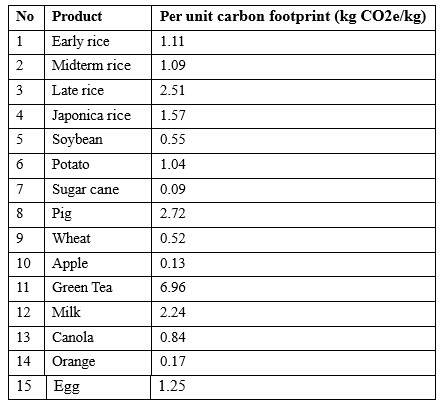
The report calculates the full lifecycle carbon footprints of agricultural products such as canola, citrus, and eggs, revealing a steady decline in emissions, now lower than in most other countries. It identifies key areas and links for emission reduction, promoting synergy between green consumption and low-carbon production under the “big food” approach.
Strategic suggestions include expanding the scope of carbon accounting and shifting the focus from limiting energy use to directly controlling carbon emissions in line with China’s dual carbon goals of emission peaking in 2030 and climate neutrality in 2060. The report also calls for integrating biological, information, and materials sciences with agriculture to build a Chinese model for low-carbon rural development.
The event also introduced the national carbon footprint factor database, signed cooperation agreements on low-carbon and rural revitalization projects, and featured expert reports and thematic discussions on climate-resilient agriculture, emissions reduction, disaster prevention, and long-term ecosystem monitoring.
Carbon footprint of Chinese agricultural products in 2025
Source: 2025 China Agriculture and Rural Low Carbon Development Report
Related links
Song, Yajuan. 2025. 我国绿色低碳农业正处于传统生产模式向可持续发展转型的关键攻坚阶段 [China’s Green Low-Carbon Agriculture Is in a Critical Stage of Transition from Traditional Production to Sustainable Development]. Guangmingwang, May 17. Retrieved May 26, 2025 (https://news.qq.com/rain/a/20250517A05FQ000).