12 October 2025, Beijing – As part of the World AgriFood Innovation Conference (WAFI 2025) in Pinggu, Beijing, the Sino-German Agricultural Centre (DCZ) hosted the German Agri-Business Innovation Forum. The event showcased how German technologies contribute to China’s agricultural modernization, sustainability, and value chain upgrading. The session was chaired by DCZ Deputy Managing Director Michaela Boehme.
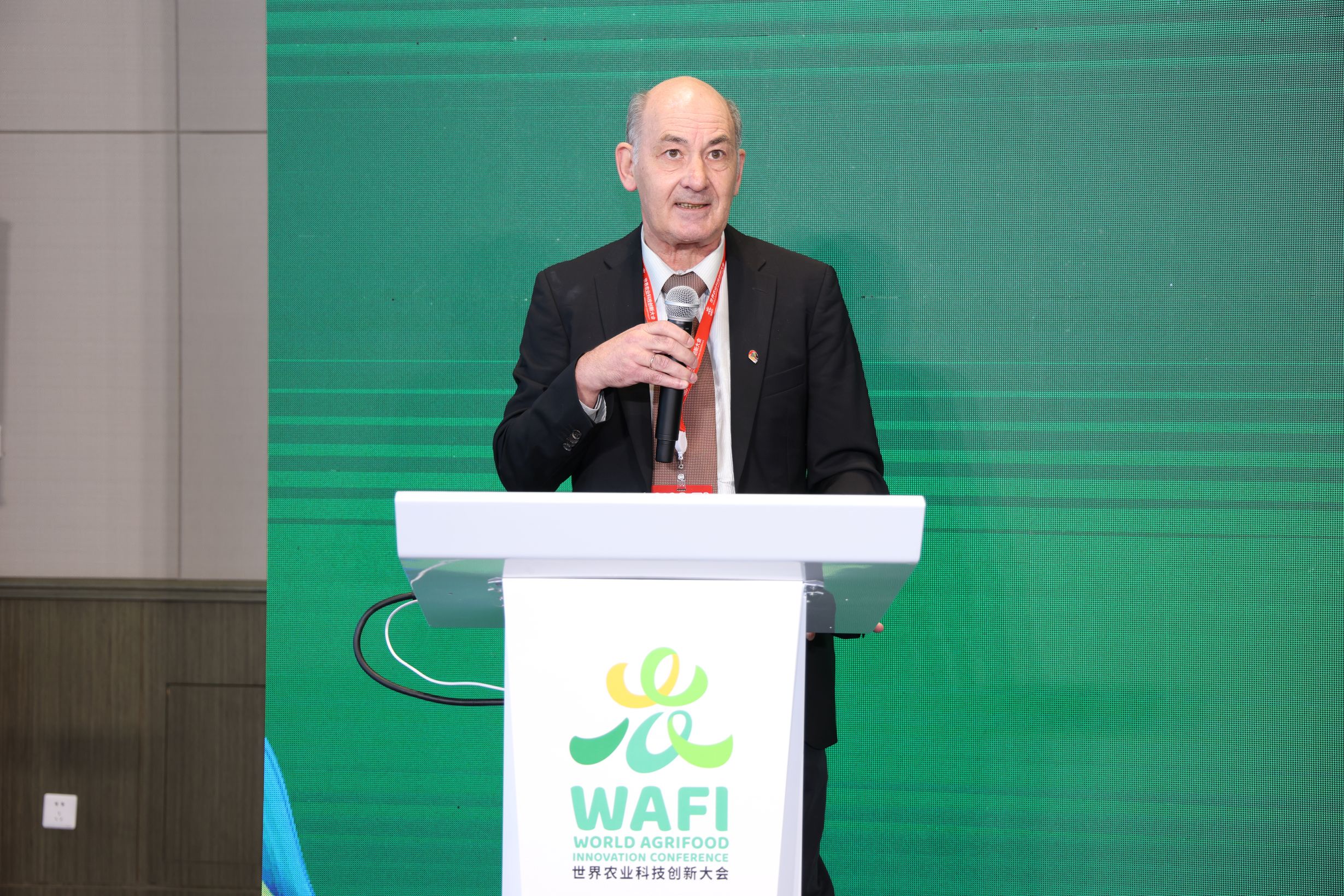
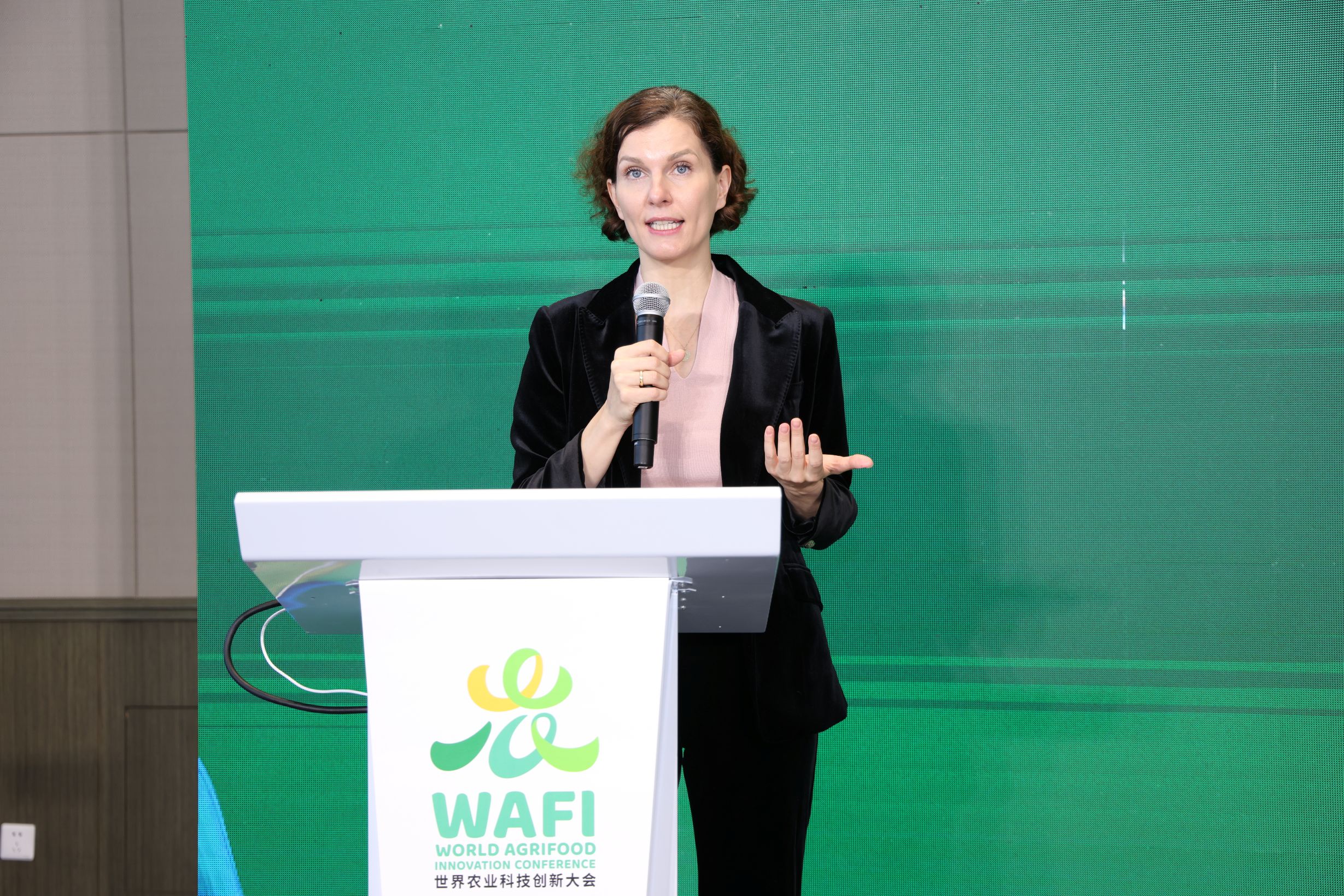
In his welcome remarks, Jürgen Ritter, Managing Director of DCZ, emphasized the Centre’s role as a long-standing platform for bilateral cooperation in agriculture and food. Friederike Dörfler, Agriculture Counselor at the German Embassy, underlined German companies’ commitment to combining food security with environmental protection, while Claudia Barkowsky, Chief Representative of the German Mechanical Engineering Industry Association (VDMA) China, highlighted the growing importance of localization and adapting technologies to the Chinese market.
DCZ Managing Director Jürgen Ritter and German Agriculture Counselor Friederike Dörfler delivering a welcome speech
The keynote session featured innovations spanning the entire agricultural value chain—from crop production and animal husbandry to resource recycling and digitalization.
Thomas Wanger, Group Leader, Agroscope Switzerland and Adjunct Professor at the Academy of Global Food Economics and Policy (AGFEP), China Agricultural University, called for diversified and data-driven systems that enhance productivity, resilience, and nutrition while reducing environmental costs.
Silvia WANG, Public Affairs & Sustainability Manager, Bayer China, presented Bayer’s approach to regenerative crop systems and digital solutions that increase yield and resource-use efficiency while empowering smallholder farmers.
ZHU Chunyu, Director, Regulatory and Governmental Affairs, BASF Agricultural Solutions Greater China, showcased BASF’s integrated crop system approach and green innovations—ranging from biocontrols to precision farming and CO₂-neutral production—aligned with China’s dual-carbon goals.
ZHENG Yong, Head of Government Affairs & Key Accounts, CLAAS China, highlighted machine optimization technologies that reduce grain and feed losses, cut fuel consumption, and improve livestock performance.
Tina XU, Sales Director, Vogelsang China, demonstrated efficient liquid manure management systems that enhance nutrient recycling and soil fertility through technologies like dribble bar and strip till application.
ZHANG Shiyan, General Manager, SILOKING China, illustrated how precision feeding and smart mixers can cut feed losses, improve milk yield, and reduce emissions, contributing to low-carbon livestock systems.
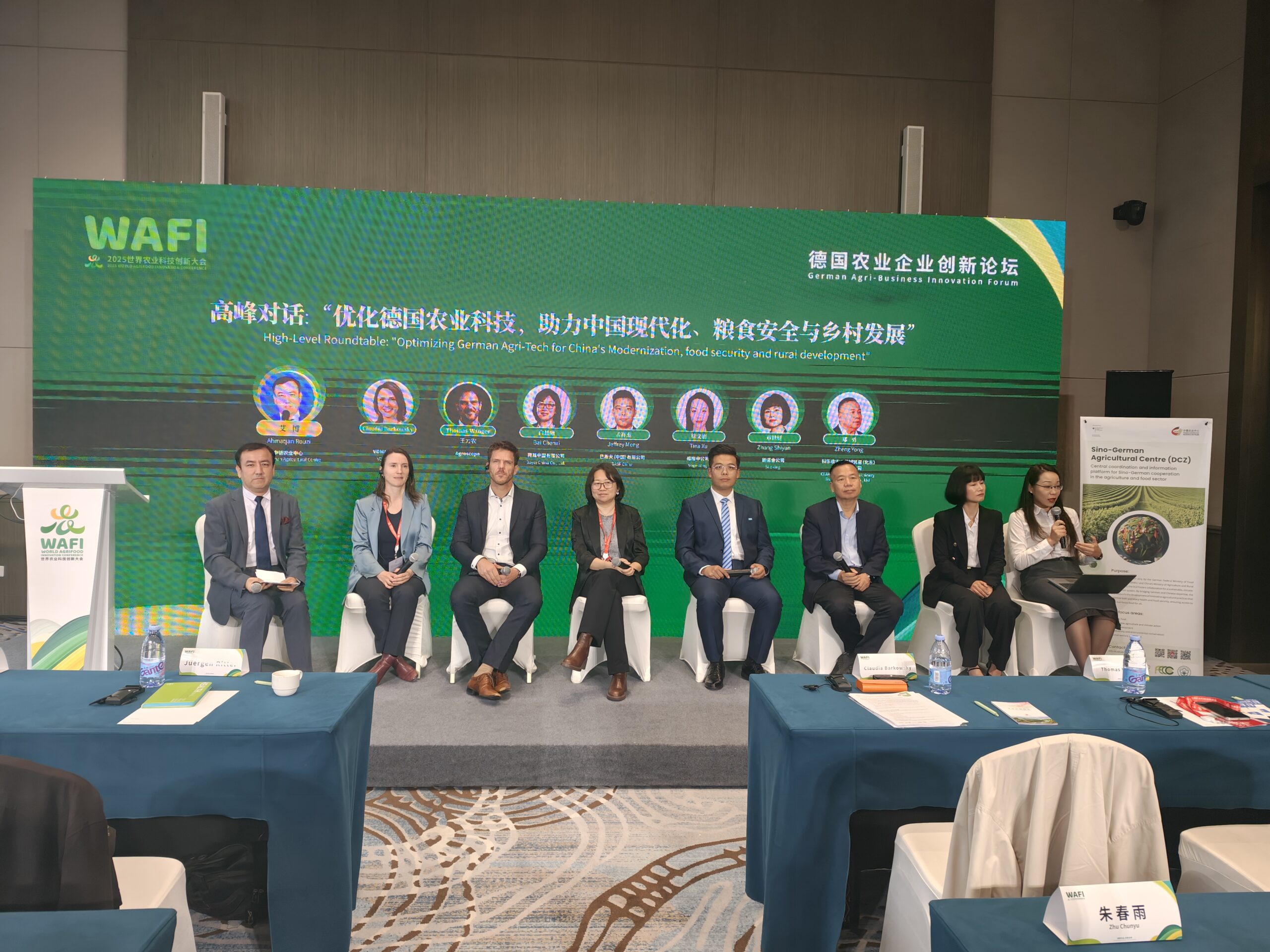
A high-level roundtable moderated by Ahmatjan Rouzi, DCZ, further explored the challenges and opportunities for German agritech in China. Panelists agreed that while current market conditions remain demanding, long-term prospects are positive—driven by land consolidation, rural labor shortages, and growing demand for automation. Future trends identified included autonomous machinery, electrification, and AI-powered farm management systems.
From left to right: Moderator Ahmatjan Rouzi (DCZ) with panelists Claudia Barkowsky (VDMA), Thomas Wanger (Agroscope), BAI Chenxi (Bayer), MENG Xiangjie (BASF), ZHENG Yong (CLAAS), ZHANG Shiyan (Siloking), and Tina XU (Vogelsang)
By connecting expertise across sectors—from inputs and on-farm management to waste recycling—the forum highlighted how smart technologies can lower production costs, raise yields, and reduce environmental impacts, creating value for both farmers and ecosystems.