On 16 January 2025, DCZ expert Dr. Ahmatjan Rouzi participated in the China International Exchange Living Room in Qingdao. The event was organized by the China Agricultural Association for International Exchange (CAAIE) and brought together representatives from government, business, and international cooperation platforms to discuss China’s agri-food “going global” strategy.
At the opening session, CHENG Jingen, CPC Party Secretary of CAAIE, introduced the association’s international agri-food cooperation platform. The platform combines expert interpretation, project showcasing, and targeted matchmaking to support Chinese agricultural enterprises in expanding internationally. Since its launch in 2024, it has hosted more than 30 activities and engaged over 500 enterprises, facilitating exchanges with embassies, international organizations, and overseas partners. Against the backdrop of rising global trade barriers, Cheng emphasized that agricultural internationalization remains both a national priority and a key pathway for strengthening China’s agri-food sector, highlighting Qingdao and Chengyang District as important nodes linking domestic and international markets.
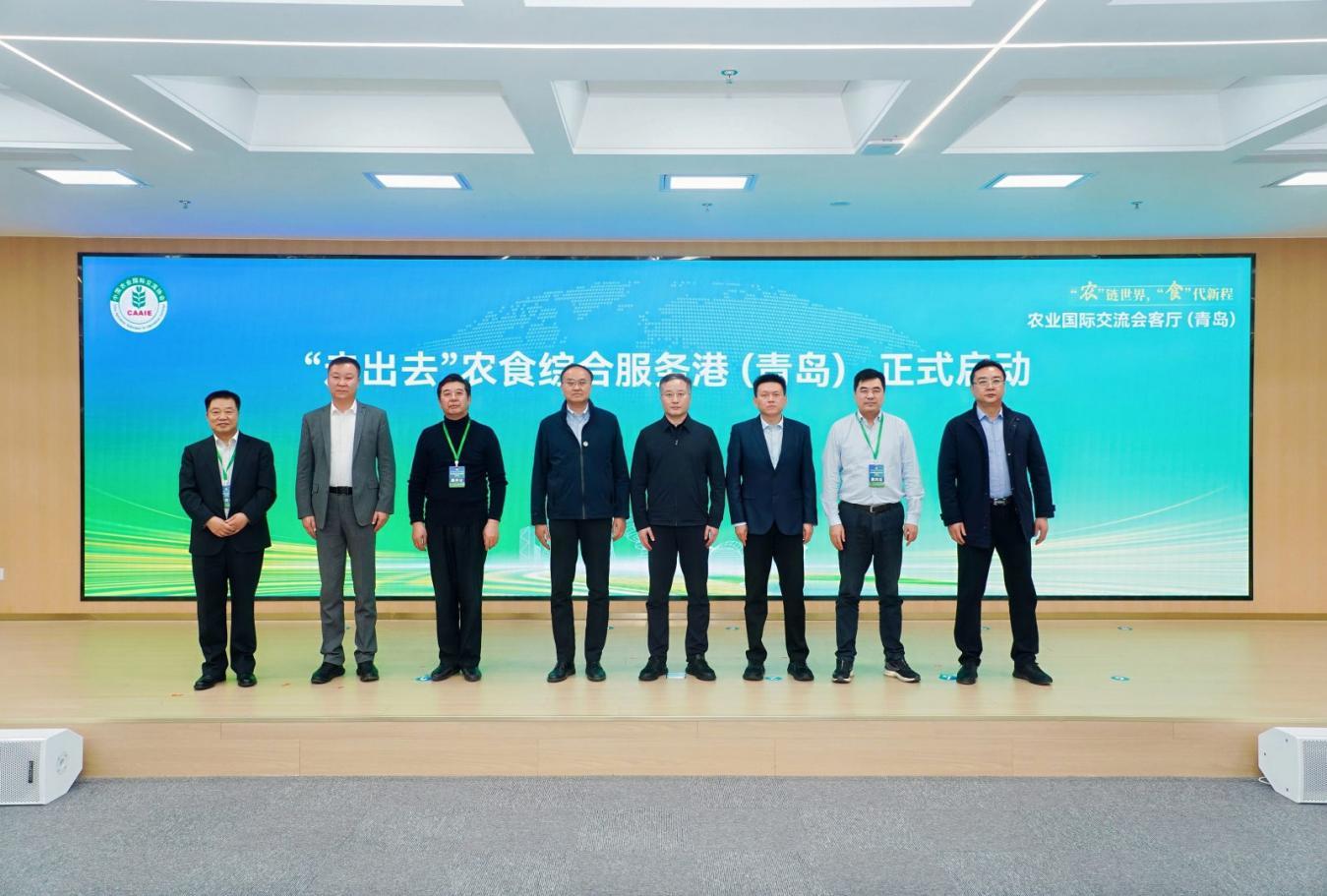
Representatives from Chengyang District outlined plans to further develop Qingdao Port into an integrated agri-food import–export hub for northern China. Central to this vision is the Qingdao Import–Export Food Industrial Park, a RMB 5.4 billion investment that has already attracted companies from the food, beverage, alcohol, and pharmaceutical sectors serving both domestic and international markets.
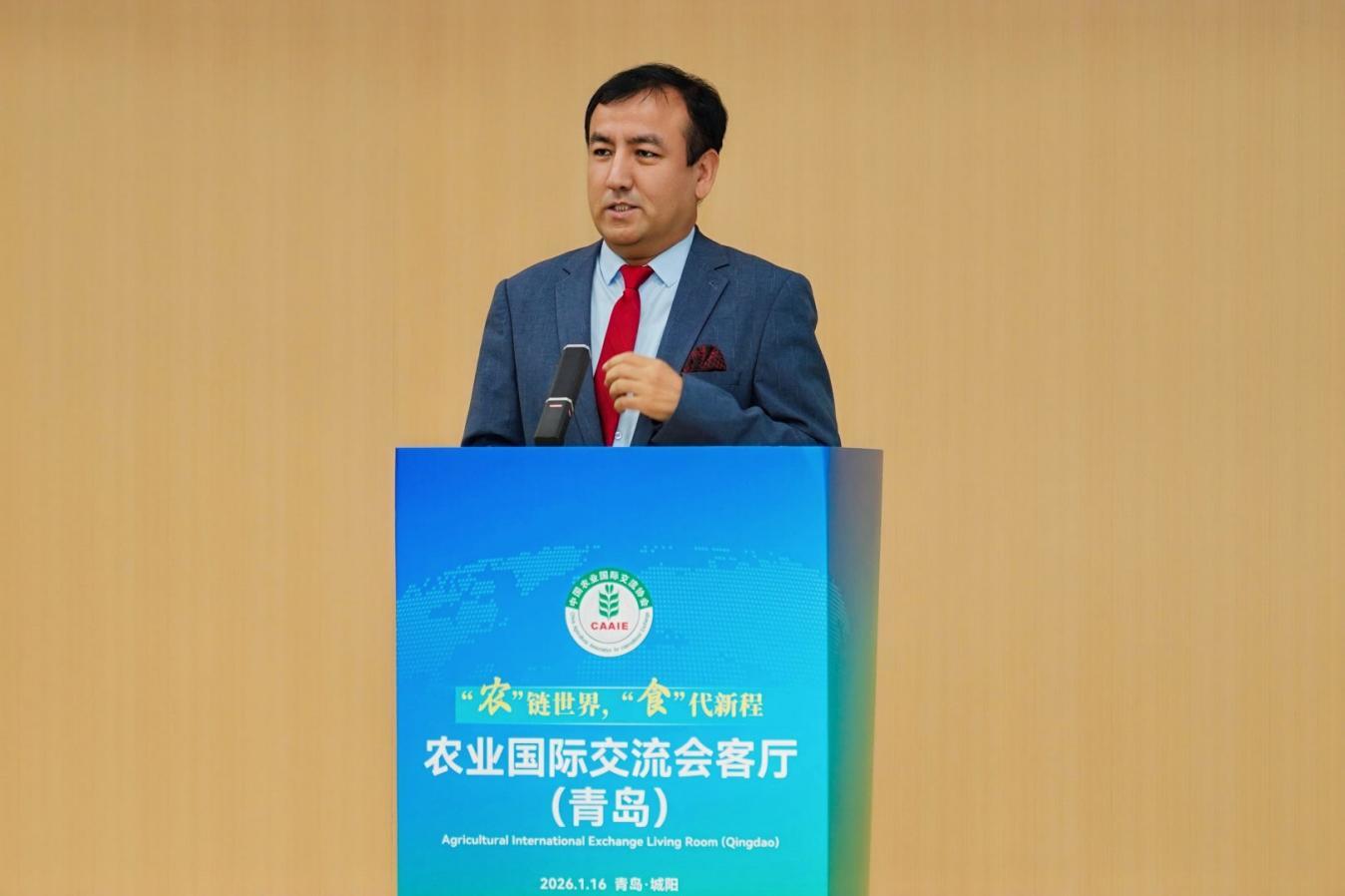
During the panel discussion, business leaders from Chinese companies shared practical experiences with global expansion and reflected on key challenges in international markets, including trade barriers, regulatory differences, and cultural diversity. Dr. Rouzi delivered a presentation titled Sino-German agri-business and trade cooperation under the global context, introducing DCZ’s work in agri-business cooperation, underlining the importance of EU–China agri-food trade, and outlining current and potential future areas for collaboration.
Dr. Ahmatjan Rouzi speaks on agri-trade cooperation
Representatives present plans to turn Qingdao into an agri-food trade hub
Overall, the event illustrated China’s growing ambition to move from being primarily a major agri-food importer toward a more export-oriented agri-food economy, particularly in processed foods, aquatic products, agricultural machinery, drones, and e-commerce.