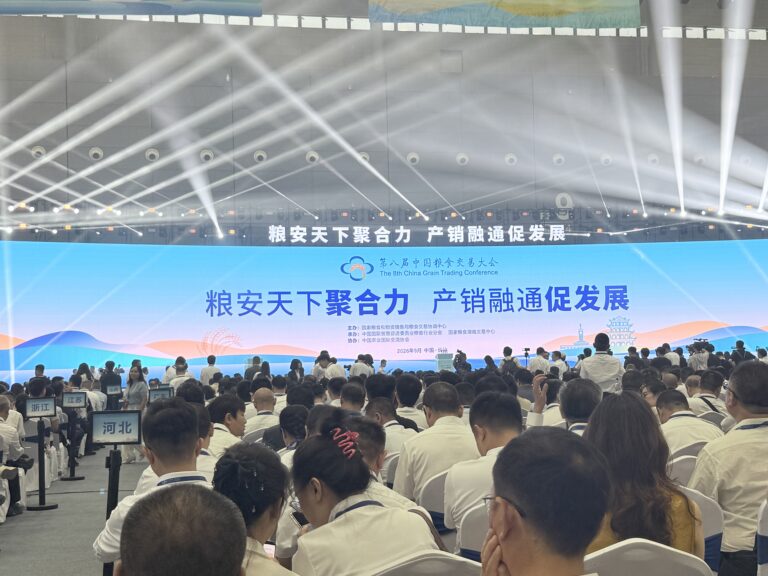
On 5 September 2026, Sino-German Agriculture Centre (DCZ) expert Dr. Ahmatjan Rouzi participated and presented at the 8th China Grain Trading Conference in Changsha, China. The conference was organized by the National Food and Strategic Reserves Administration of China, the China Council for the Promotion of International Trade (CCPIT), and co-sponsored by the China Agricultural Association for International Exchange (CAAIE), and the Hunan provincial government.
This year’s theme was “Safeguarding grain security through cooperation and promoting development through integrated production and marketing.” The conference attracted more than 3,100 companies and over 20,000 industry participants, covering the entire grain value chain from production and storage to processing and consumption, and featuring products from 340 formerly poverty-stricken counties.
LIU Huanxin, head of the National Food and Strategic Reserves Administration, called for stronger coordination between grain-producing and grain-consuming regions, improvements in the production–procurement–storage–processing–marketing system, and greater emphasis on both grain quantity and quality.
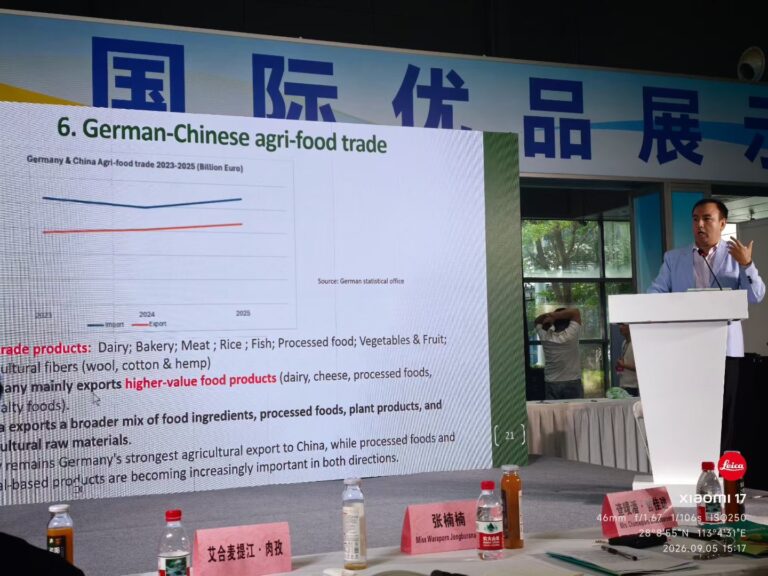
Dr. Rouzi spoke at the sub-forum on international quality products and agricultural cooperation, organized by the China Agricultural Association for International Exchange (CAAIE). In his presentation, he introduced the DCZ’s work on Sino-German cooperation in agricultural trade and agribusiness. He highlighted opportunities to combine German technologies, brands, and expertise with Chinese production capacities, research and development capabilities, and marketing networks to create new business models and strengthen long-term cooperation between companies from both countries.
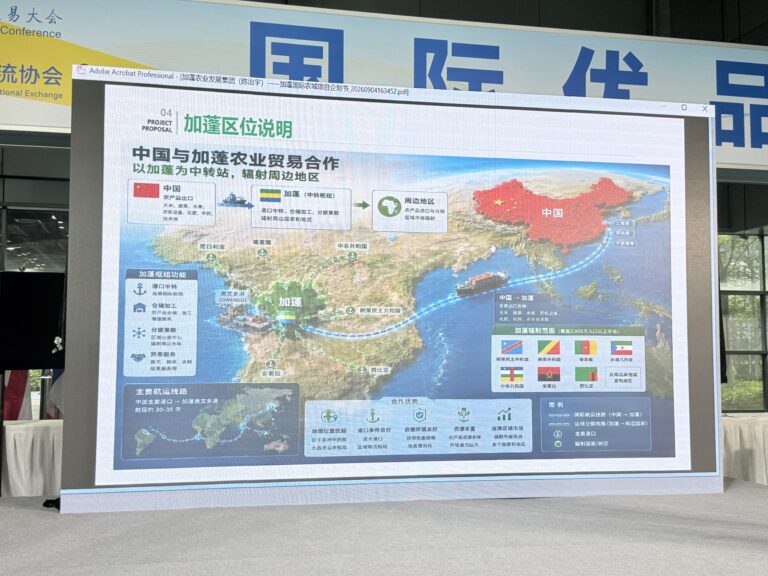
Representatives from Kazakhstan, Gabon, Thailand, and Tajikistan presented their countries’ agricultural cooperation with China, highlighting the growing role of bilateral partnerships in China’s international agricultural engagement.
The business perspective was also represented. Chinese companies, including Jiangxi New Zesting Technology, presented examples of their overseas activities, including investments in agricultural production and food processing facilities in African countries such as Gabon and Angola.
During the conference, Kazakhstan and China officially launched a joint digital platform for grain and agricultural trade. Thirty-five Kazakh companies have already registered on the platform, and a first contract was signed for the export of 24,000 tons of flaxseed.
Taken together, the conference discussions reflected the growing importance of international cooperation in strengthening food security and agricultural resilience amid multiple global challenges. They also pointed to China’s expanding role in international grain trade and its increasing engagement in agriculture- and food-related infrastructure development across Belt and Road countries.