Is organic farming part of the solution to global food security and sustainability? What policies are shaping the future of agriculture in China, the EU, and Germany—and what is it like to be an organic farmer in today’s China?
These questions were at the centre of a recent conference on sustainable agriculture and organic farming, hosted by the German Embassy in Beijing and co-organized by the Embassy’s Agricultural Team and the Sino-German Agricultural Centre (DCZ).
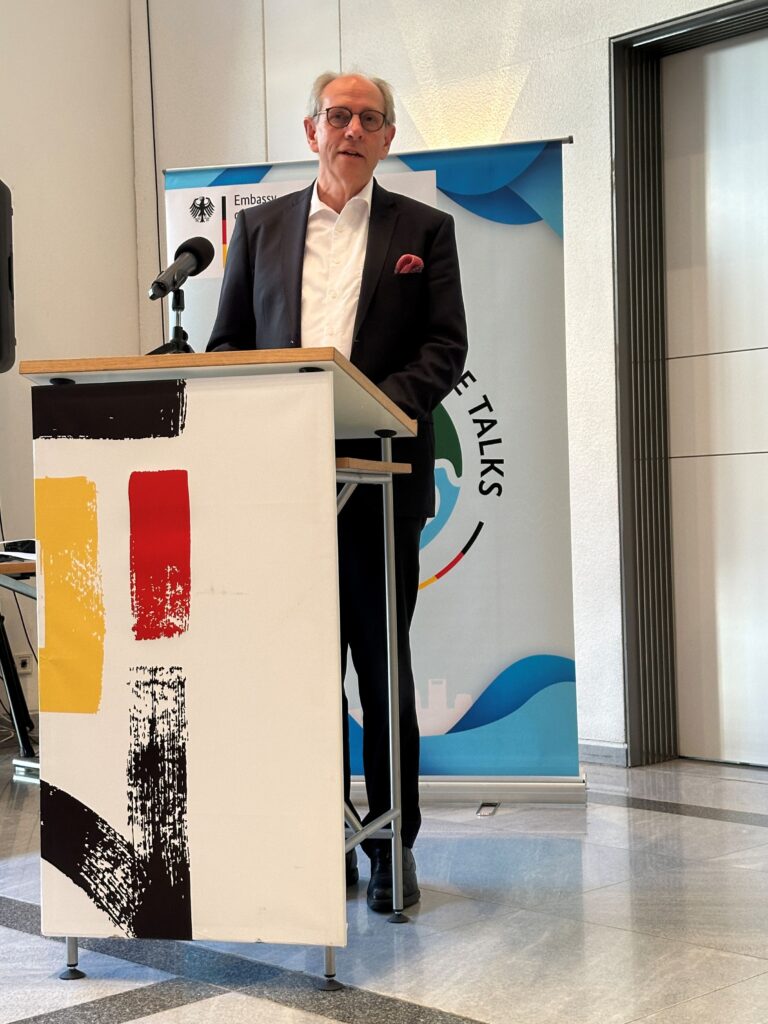
Opening remarks were delivered by Chargé d’Affaires Stephan Grabherr. Cornelia Berns from Germany’s Federal Ministry of Agriculture, Food and Regional Identity (BMLEH) gave a keynote on Germany’s organic farming strategy, followed by insights into EU-level developments from Wojciech Ptak, Agricultural Counselor at the EU Delegation to China.
Voices from the field
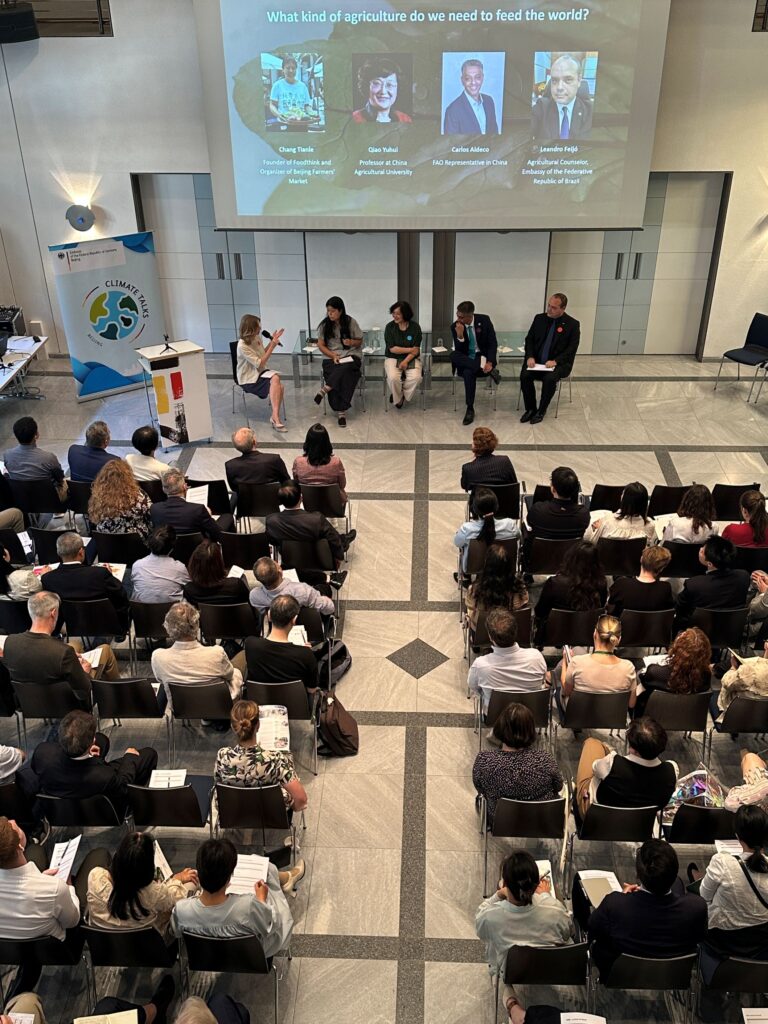
A dynamic fishbowl discussion brought together a diverse group of experts and practitioners:
Carlos Aldeco, Food and Agriculture Organization (FAO)
Leandro Feijó, Embassy of Brazil
Prof. Qiao Yuhui, China Agricultural University
Chang Tianle, Foodthink
Luo Peiqi, Pingren Farm
Dr. Shi Yan, Shared Harvest Farm
Andreas Krause, German Chamber of Commerce, Shanghai
Jay Wang, Naturland
Geng Yunxia, Ecocert
Moderated by Michaela Boehme from the DCZ, the conversation spanned local experiences and international perspectives—highlighting both obstacles and opportunities for sustainable and organic agriculture in China and beyond.
Stephan Grabherr, Chargé d'Affairs at the German Embassy welcomes the audience
Panelists discuss pathways to sustainable agriculture
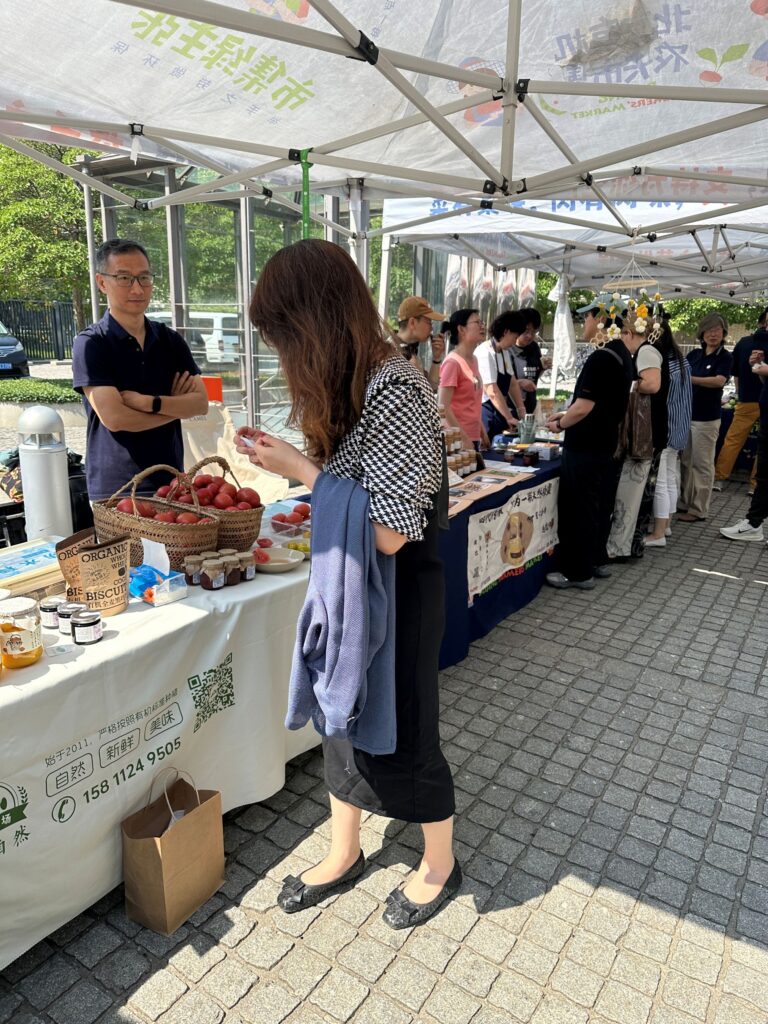
An organic farmers' market connects producers and consumers
Key takeaways
Organic farming was discussed as part of a broader spectrum of sustainable practices. The following points emerged as central themes:
Sustainable agriculture exists on a continuum—from input reduction to agroecology and certified organic systems. These approaches can complement each other and offer different pathways to resilience.
Organic systems often perform better under climate stress, thanks to their greater diversity and complexity.
Chinese organic farmers face persistent structural challenges: limited access to reliable sales channels, fragmented markets, and the need to build consumer trust.
Despite this, the market outlook is positive. Growing environmental awareness and health consciousness among Chinese consumers may drive increased demand for organic products.
For German organic companies, China’s rapid e-commerce logistics offer strong advantages—but the “Made in Germany” label alone may not be enough. Clear messaging around standards and sustainability remains key.
The event closed with an organic farmers’ market and a networking lunch—providing space for informal exchange and new connections across the organic food and farming community.