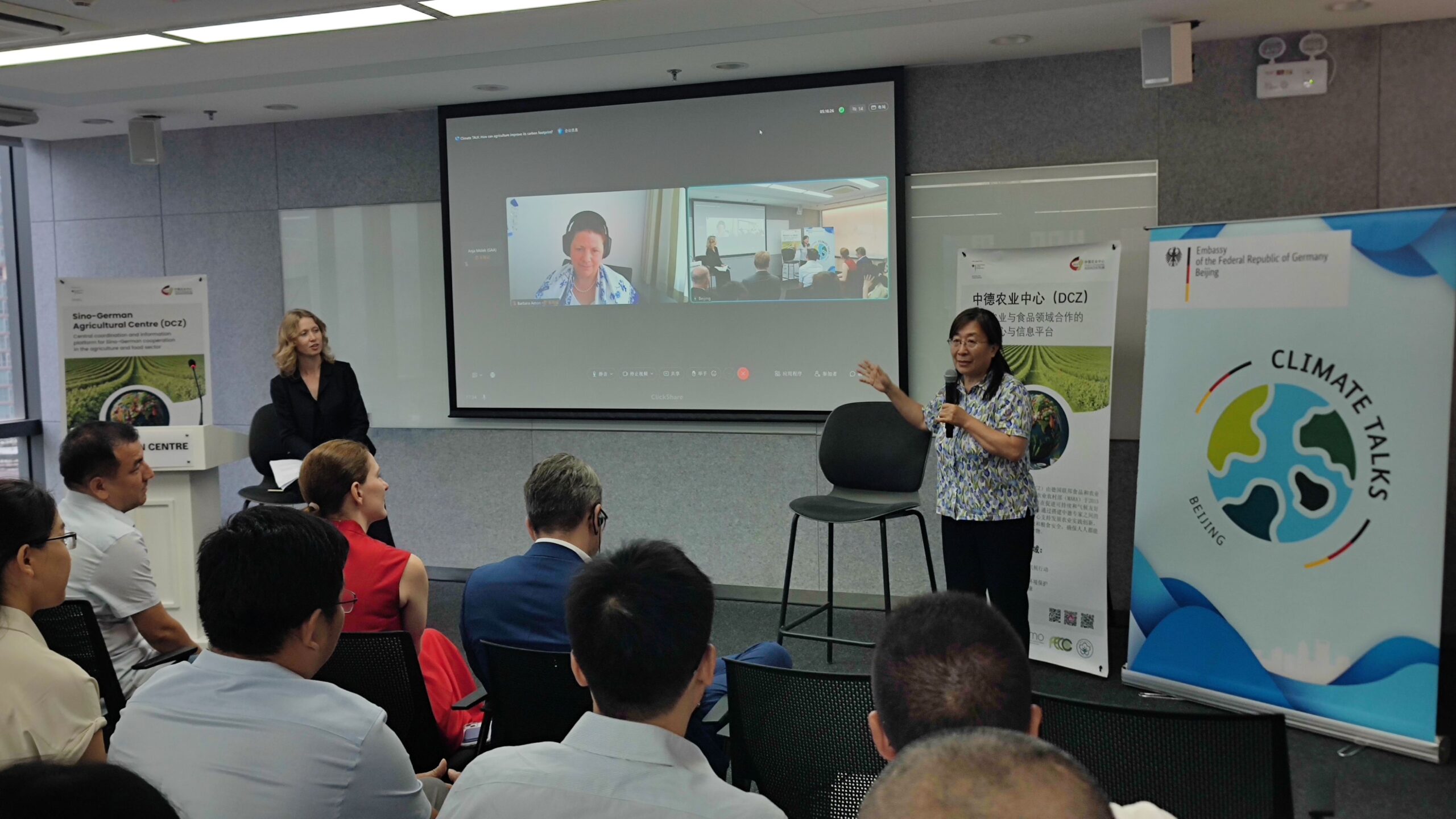
On 3 July 2025, the Sino-German Agricultural Centre (DCZ) and the Chinese Academy of Agricultural Sciences (CAAS) co-hosted a Climate Talk titled “Reducing Methane, Storing Carbon: Strategies to Shrink Agriculture’s Climate Footprint”. The event took place in Beijing, with support from the German Embassy and the German Centre Beijing, and was sponsored by the German Federal Foreign Office as part of its international Climate Talks series.
The event opened with remarks by Dr. Jürgen Ritter, Managing Director of DCZ, followed by a welcome speech by Dr. Thomas Weithöner, Head of the Economic Department at the German Embassy in Beijing. Dr. Weithöner emphasized that while agriculture is a contributor to greenhouse gas emissions, it also holds great potential as part of the solution—particularly through its capacity to sequester carbon.
Two keynote speeches followed, each examining key agricultural greenhouse gases—methane and nitrous oxide—from the perspectives of Germany and China.
In the first keynote, Prof. Barbara Amon of the Leibniz Institute for Agricultural Engineering and Bioeconomy (ATB) emphasized that all pathways to limiting global warming to 1.5°C require land-based mitigation. She highlighted that land use and land use change (LULUC) account for approximately 24% of global GHG emissions. Under Germany’s climate law, emissions from the agricultural sector are set to decrease from 70 million tons CO₂e in 2020 to 58 million tons by 2030—a reduction of around 17%.
Most agricultural emissions in Germany originate from livestock systems, especially enteric fermentation and manure management, underscoring the need to prioritize mitigation in this sector. Promising strategies include dietary adjustments to reduce nitrogen excretion, improvements in housing and manure treatment, and expanded use of biogas. Prof. Amon also underlined the benefits of integrated crop-livestock systems, which can reduce external inputs, improve nutrient cycling, and support more sustainable and circular farming. She presented two European initiatives—DairyMix and MilKey—that promote such approaches and provide multi-criteria sustainability assessment tools.
The second keynote, delivered by Prof. Dong Hongmin from the Institute of Environment and Sustainable Development in Agriculture (CAAS), offered a detailed overview of China’s approach to agricultural methane reduction. She noted that while China is the world’s second-largest emitter of methane, its emission intensity is among the lowest globally, only slightly higher than that of the EU. She also stressed that China’s per capita agricultural methane emissions remain comparatively low, even as overall emissions have grown in recent years.
Prof. Dong outlined the policy frameworks guiding China’s mitigation efforts during the current Five-Year Plan period, including the Methane Emission Control Action Plan, the “1+N” framework for carbon peaking and neutrality, and the Implementation Plan for Agricultural and Rural Emission Reduction and Carbon Sequestration. She noted that these national strategies were informed by earlier exchanges between Chinese and German scientists, including study visits organized by DCZ in 2019 under its climate component.
In addition to regulatory approaches, Prof. Dong highlighted China’s current efforts to develop carbon accounting systems and national inventories, including a carbon footprint database for agricultural products.
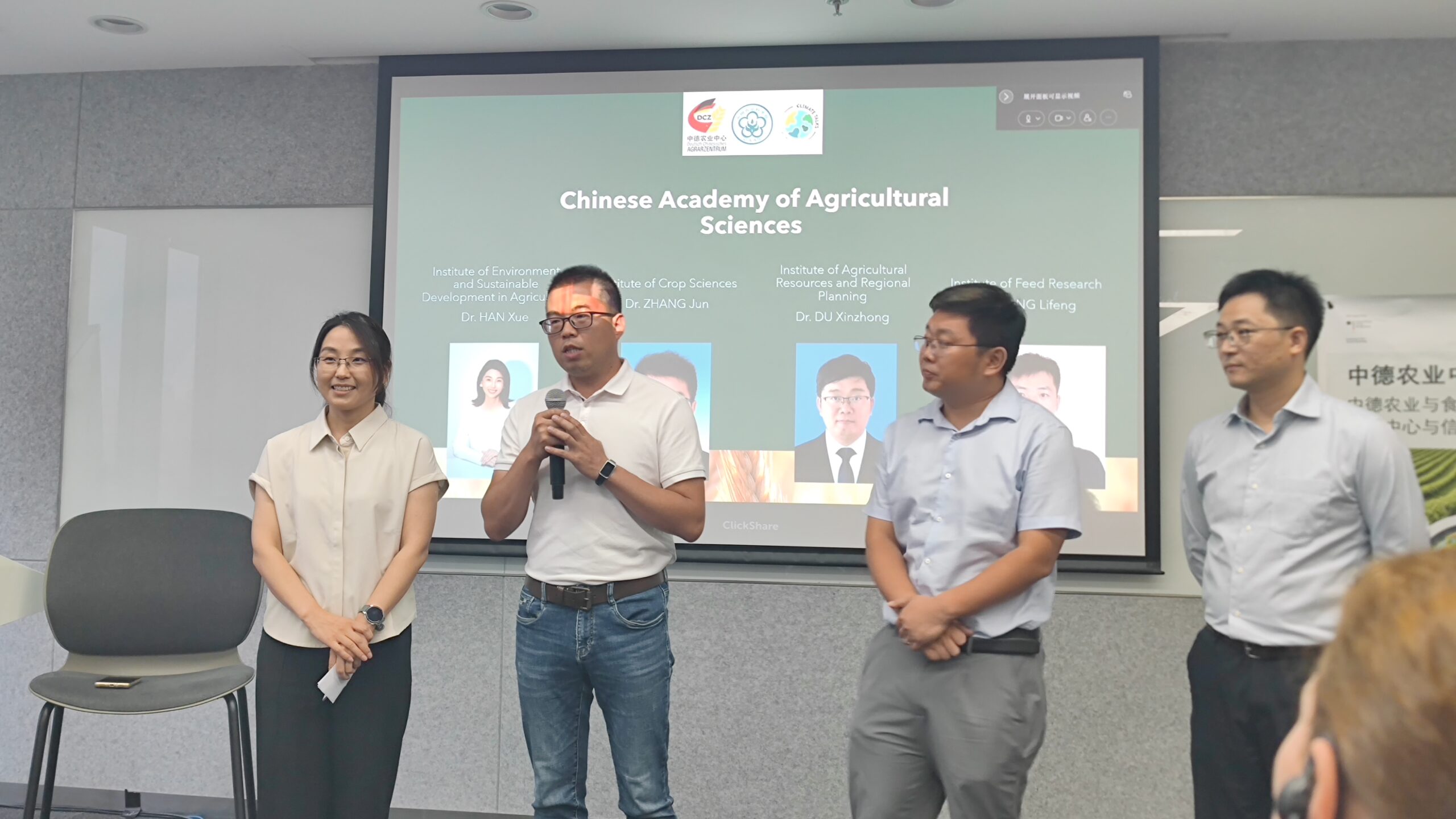
The second half of the event featured presentations by four CAAS research institutes, showcasing applied research on mitigation and adaptation in agriculture:
The Institute of Agricultural Resources and Regional Planning presented research on how integrated rice straw management can improve carbon sequestration in paddy fields while reducing methane emissions.
The Institute of Environment and Sustainable Development in Agriculture introduced a national GHG monitoring platform and a carbon accounting model for agricultural products.
The Institute of Crop Sciences demonstrated methods for reducing methane emissions from rice cultivation, including straw management and alternative irrigation techniques.
The Feed Research Institute showcased new tools and systems for monitoring methane emissions from ruminants.
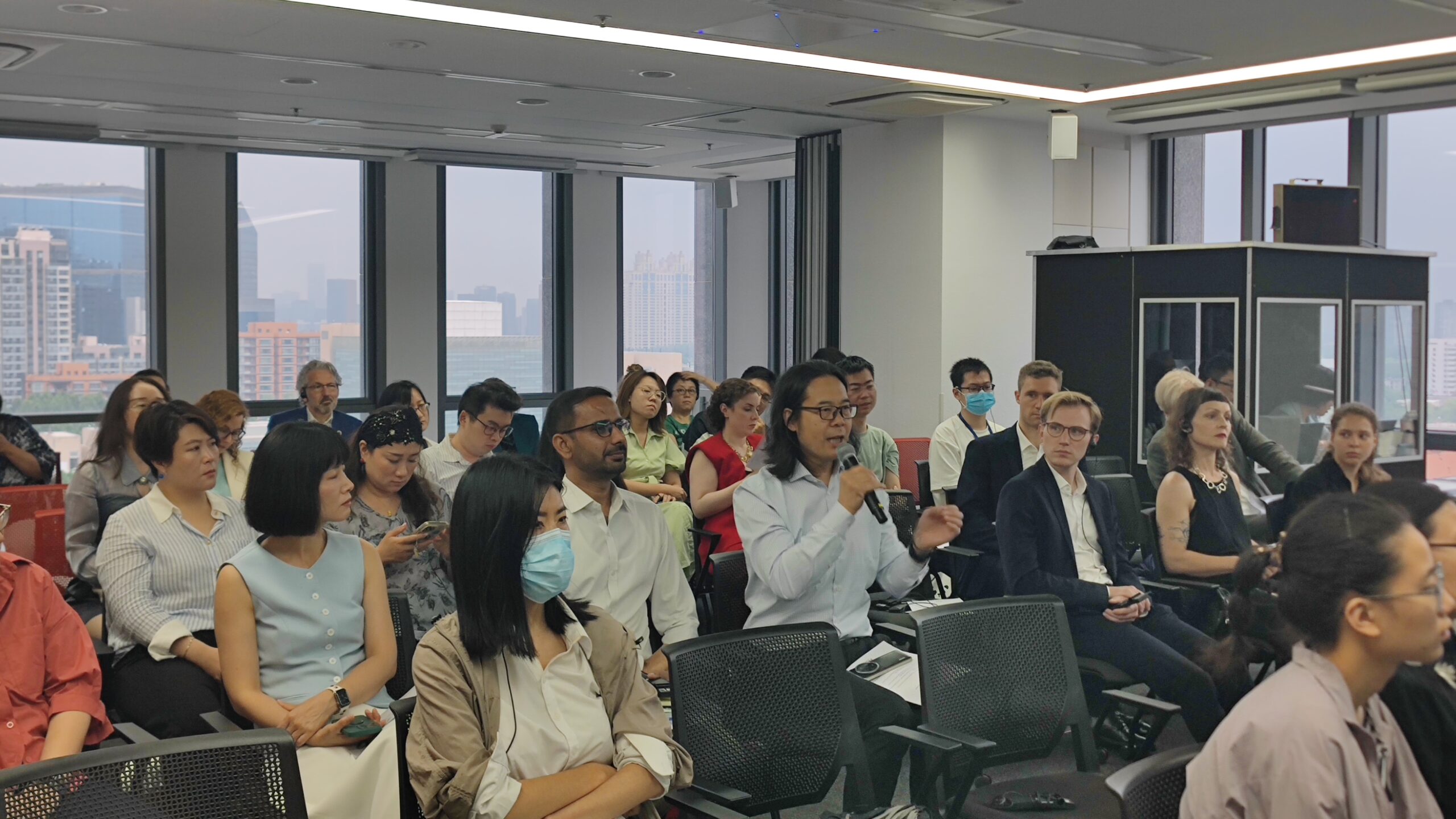
The Q&A session, moderated by Dr. Michaela Boehme, Deputy Managing Director of DCZ, brought forward several key discussion points:
The need for harmonized GHG accounting methodologies across countries and sectors;
The importance of financial incentives to encourage adoption of low-emission practices;
And the growing role of consumer choices and dietary shifts, including greater consumption of plant-based foods, in meeting climate goals.
The event concluded with a reception and poster exhibition, giving participants the opportunity to continue discussions with keynote speakers and CAAS researchers in an informal setting.