On 10 December 2025, the Federal Ministry of Food, Agriculture and Regional Identity (BMLEH) presented Germany’s new Agricultural Export Strategy in Berlin. The overarching goal of the strategy is to sustainably increase agricultural exports, both within the EU and to non-EU markets with high growth potential.
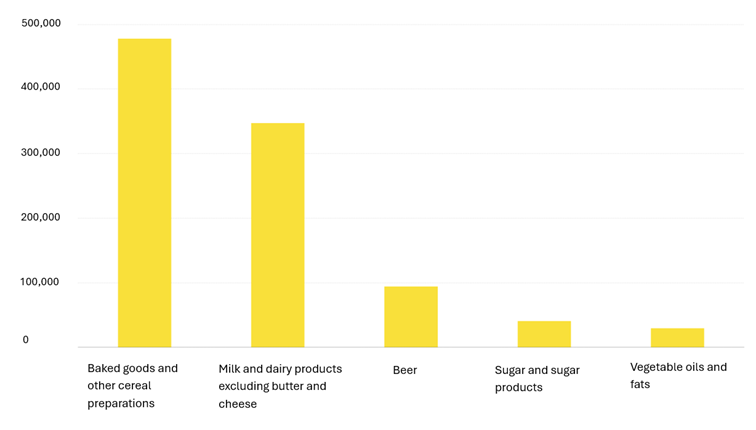
China, the world’s largest food market, continues to attract strong interest from German agri-food exporters. In 2024, German agricultural exports to China amounted to approximately EUR 1.5 billion. Exports of German baked goods increased by 37%, reaching a value of EUR 487 million, reflecting growing demand among Chinese consumers. By contrast, exports of milk and dairy products declined to EUR 347 million, while exports of meat and meat products also continued to fall. These trends underline the relevance of the new strategy, particularly its focus on reducing trade barriers.
The five leading agricultural exports to China in 2024 in EUR 1,000. Adapted from: BMEL-Statistik: Deutscher Außenhandel mit China
The strategy identifies five areas of action, each supported by specific measures to improve the political, legal, and economic framework for German agricultural exports.
Strengthening competitiveness and innovation
The first area of action focuses on strengthening competitiveness in the agricultural sector. Measures include tax relief, reduced bureaucracy, and support for innovation, digitalization, and artificial intelligence. The strategy emphasizes the implementation of existing government measures such as accelerated depreciation, fuel tax refunds, insurance regulations to facilitate short-term work, and reductions in energy costs. Support for breeding technologies, the bioeconomy, and interoperable digital applications is also foreseen.
New structures and export support instruments
The second area of action introduces new structures and instruments. Existing export promotion tools will be more closely aligned with the needs of small and medium-sized enterprises. Planned measures include the appointment of an export coordinator and an export chief veterinary officer, as well as an increased budget for export promotion. Enhanced dialogue with industry is intended to support new activities such as digital tools on import requirements, certification procedures, and market opportunities, alongside structured exchanges of expertise between companies.
Promoting visibility and the “Made in Germany” brand
The third area of action aims to increase international visibility and strengthen the “Made in Germany” brand. Building on existing experience, the strategy plans to establish additional contact points in priority export countries, complementing the work of agricultural attachés. The bilateral cooperation program will be used to support economic and trade dialogue, while the trade fair program will be expanded to improve international market access for German companies.
Improving framework conditions and market access
Political and regulatory instruments are addressed in the fourth area of action. The strategy emphasizes multilateral approaches to promote greater alignment between EU production standards and those of third countries. At the bilateral level, negotiations on veterinary certificates, phytosanitary agreements, and export restrictions related to disease outbreaks remain central. Anti-competitive trade practices and subsidies in third countries are to be addressed through existing EU and WTO trade policy instruments.
Identifying future markets
The fifth area of action supports businesses in identifying promising future export markets. Market analyses are intended to particularly benefit small and medium-sized enterprises. To this end, the strategy plans to establish a knowledge network drawing on expertise from within BMLEH, its subordinate institutions, advisory bodies, agricultural attachés, and results from project-based work.
What the strategy means for German agri-food companies active in China
The size of the Chinese market, growing consumer demand for higher-quality and healthier food, and the ongoing modernization of agriculture make China an important partner for German agri-food companies across the value chain—from agricultural inputs and precision farming to machinery, food products, and brands. At the same time, the regulatory environment remains complex. Biosafety concerns related to animal diseases have restricted market access for products such as pork and beef, while new tariffs on dairy products have affected German and EU exporters.
Against this backdrop, the new strategy aims to strengthen support for German companies navigating regulatory requirements and engaging with China to facilitate trade in an environment of rapidly shifting global trade flows.