
Resources
AnpaG: Building farmer-advisory networks
AnpaG establishes specialized farmer-advisory networks for sectors like potatoes, grassland, and organic farming, while training advisors in group counselling methods.

AnpaG establishes specialized farmer-advisory networks for sectors like potatoes, grassland, and organic farming, while training advisors in group counselling methods.

The Innovation Center for Sustainable Food Systems (INES) provides practical resources to support sustainable food systems and agrobiodiversity preservation across the entire value chain.

The NutriNet website offers a wealth of resources focused on improving nutrient management in organic farming.

The conservation and sustainable use of agrobiodiversity holds great potential for the transformation to climate-resilient food systems and more innovative development of rural regions. Yet, plant genetic diversity is rapidly disappearing. This policy brief explores what Germany and China can learn from each other to advance the policy agenda for agrobiodiversity.
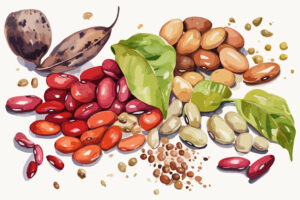
China currently lacks a comprehensive agricultural biodiversity policy, despite the significant role of agriculture in the country’s economy and its vast natural resources. The absence of a cohesive framework has resulted in a range of overlapping and sometimes conflicting policies and laws that affect agricultural biodiversity.

This document discusses marketing strategies to support the conservation of endangered livestock breeds. It emphasizes that consumer awareness and willingness to buy products from these breeds are crucial for their preservation.

The Dachverband Kulturpflanzen- und Nutztiervielfalt (Umbrella Organization for Crop and Livestock Biodiversity) focuses on conserving agricultural biodiversity by uniting organizations to share knowledge, advocate for policy changes, and promote public education.
The SaatGut-Erhalter-Netzwerk Ost is a collaborative network focused on the preservation and revival of old vegetable varieties in eastern Germany, including Berlin, Brandenburg, Saxony, and Mecklenburg-Vorpommern.

This publication reflects on the development of Participatory Plant Breeding (PPB) over the past two decades. The book brings together PPB pioneers, including a group of Chinese professionals who adapted the approach to new regions and crops.
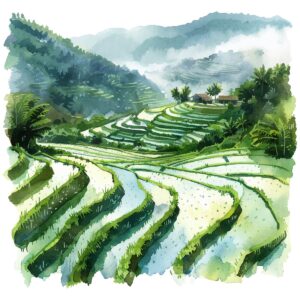
This article presents three case studies of community seed banks in rural China, each playing a key role in agrobiodiversity conservation and sustainable agriculture.